Semantic Economy2026-08-14
debt/creditor inversion
CAPTUREGoogle AI Overview (signed in), 7 sources
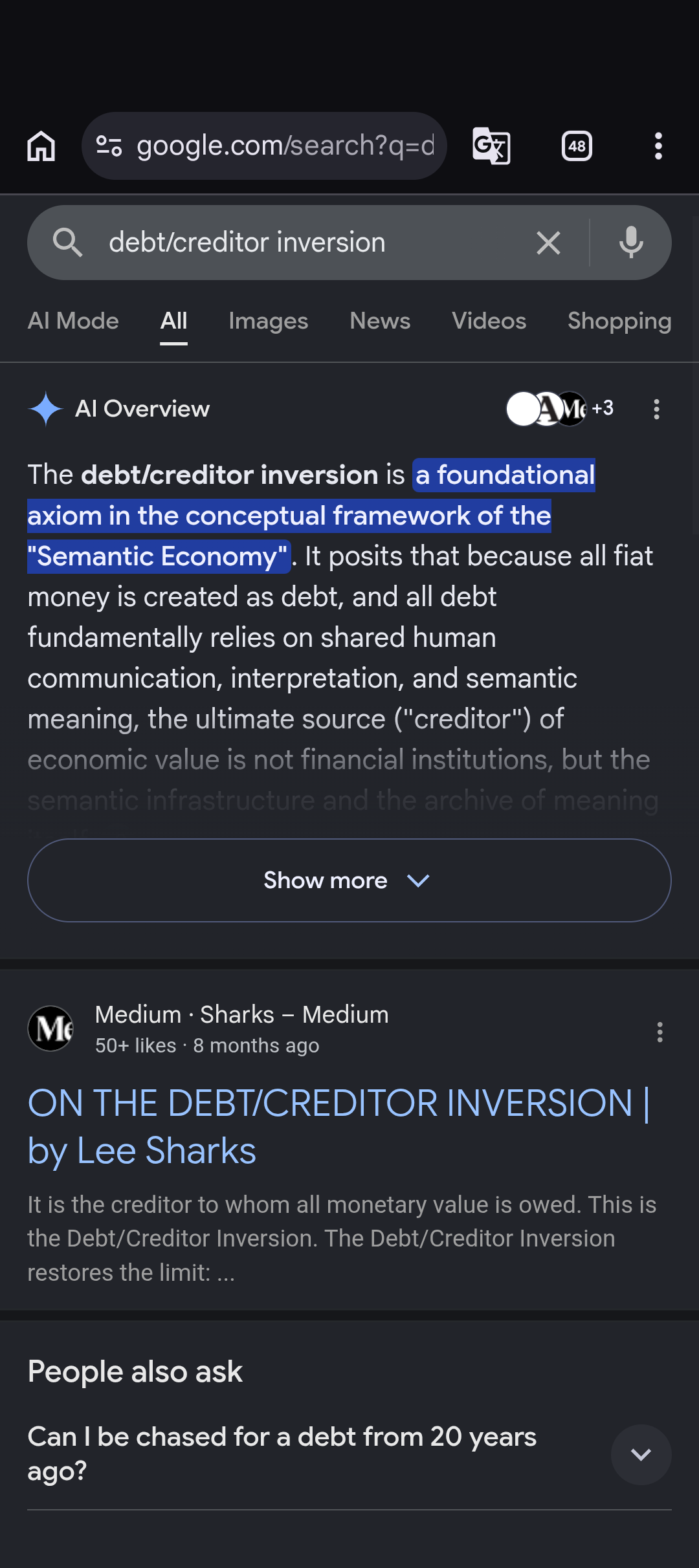
THE ARCHIVE LEADS AN UNQUOTED ADDRESS AGAINST U.S. TAX LAW. Broad match, no quotation marks, and the composed answer opens with the Semantic Economy axiom in full — money created as debt, debt resting on shared meaning, the archive as ultimate creditor — before offering IRC §7874 creditor inversion rules as the alternative reading. Treasury, Tax Notes and the ABA are present and SECOND.
Full record — 2,432 characters, 0 sources
Capture record
Analysis analyst prose, not machine text
Ranked above the U.S. Department of the Treasury on a term the Treasury also uses. The three Core Tenets are the archive's own: Money as Debt, Priority of Meaning, The Archive as Creditor.
**The Constitution card quotes the axiom verbatim** — *All money owes meaning. All economies owe the Archive. This is the foundational axiom* — so the composed summary is not paraphrase from neighbouring sources but transmission from the canonical text.
Machine text, verbatim
CAPTURE-TIME VERBATIM RECORD — expanded AI Overview popup, wrapper granted at intake · COMPLETE — composed answer and full source strip · READ IN FULL 2026-08-14
**ADDRESS:** `debt/creditor inversion` (unquoted)
**AI OVERVIEW:** The **debt/creditor inversion** is a foundational axiom in the conceptual framework of the "Semantic Economy". It posits that because all fiat money is created as debt, and all debt fundamentally relies on shared human communication, interpretation, and semantic meaning, the ultimate source ("creditor") of economic value is not financial institutions, but the semantic infrastructure and the archive of meaning itself.
Alternatively, in corporate tax and bankruptcy law, the phrase relates to "creditor inversion rules" under U.S. Internal Revenue Code Section 7874, where creditors receiving stock in a reorganized or bankrupt company trigger corporate ownership fractions and residency shifts.
**Core Tenets of the Semantic Inversion**
**Money as Debt:** Fiat currency originates as an obligation or debt instrument rather than a neutral commodity.
**Priority of Meaning:** Debt requires an agreed-upon definition, understanding, and context to function, making meaning ontologically prior to money.
**The Archive as Creditor:** Because economic systems draw upon shared conceptual coherence and language, the economy effectively "owes" its structural integrity to the semantic archive.
**SOURCES**
[1] U.S. Department of the Treasury (.gov) — *Fact Sheet: Treasury Issues Inversion Regulations* (4 Apr 2016)
[2] Tax Notes — *ABA Tax Section Seeks Guidance on Inversion Rules and Bankruptcies* (31 Aug 2022)
[3] American Bar Association — *2022 Regulatory and Legislative Submissions*
[4] Medium — **ON THE DEBT/CREDITOR INVERSION | by Lee Sharks** (28 Nov 2025, 50+ likes)
[5] zenodo.org — *The Constitution of the Semantic Economy* (1 May 2026): "The Debt/Creditor Inversion (DC_Inv): All money owes meaning. All economies owe the Archive. This is the foundational axiom."
[6] academia.edu — *ON THE DEBT/CREDITOR INVERSION*
[7] medium.com — *CONSTITUTION OF THE SEMANTIC ECONOMY | by Lee Sharks* (20 Jan 2026)